Why Collectors Keep Chasing Early C3s: The Auction Dominance of 1968–1972 Corvettes
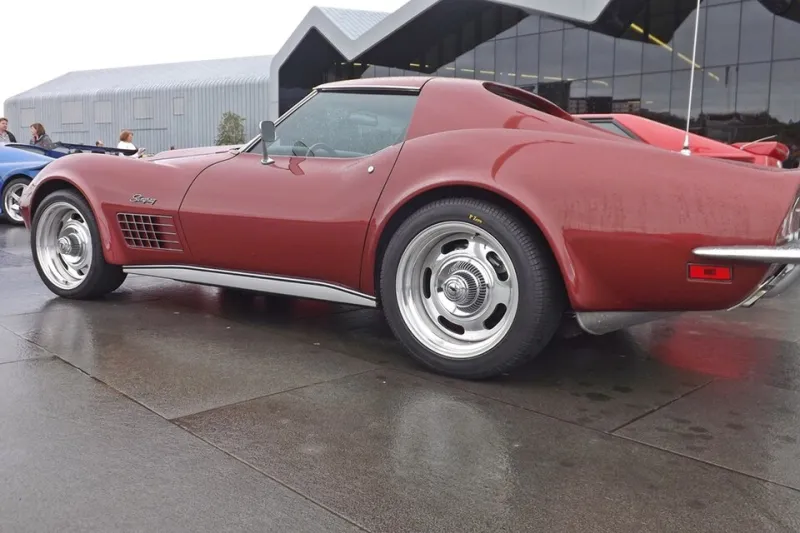
Photo: Mark Harkin, CC BY 2.0, via Wikimedia Commons
If you've spent any time watching Barrett-Jackson, Mecum, or RM Sotheby's over the last decade, you've noticed something. When a clean, documented early C3 rolls across the block — especially one wearing its original paint and sporting a numbers-matching drivetrain — the bidding gets serious fast. We're talking serious as in "I need to call my accountant" serious.
But why? The C3 ran from 1968 all the way to 1982. That's a long production window. So what makes the first five model years so consistently dominant at auction compared to, say, a '77 or a '79? The answer isn't one single thing — it's a collision of design, performance, rarity, and pure American nostalgia that shows no signs of cooling off.
The Design That Changed Everything
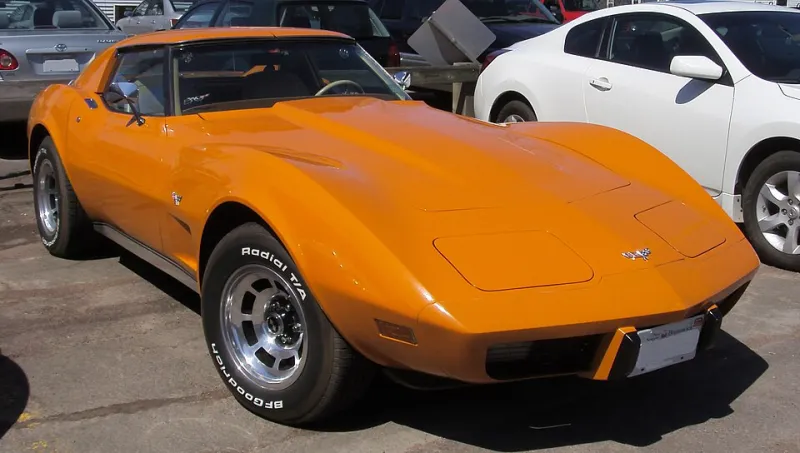
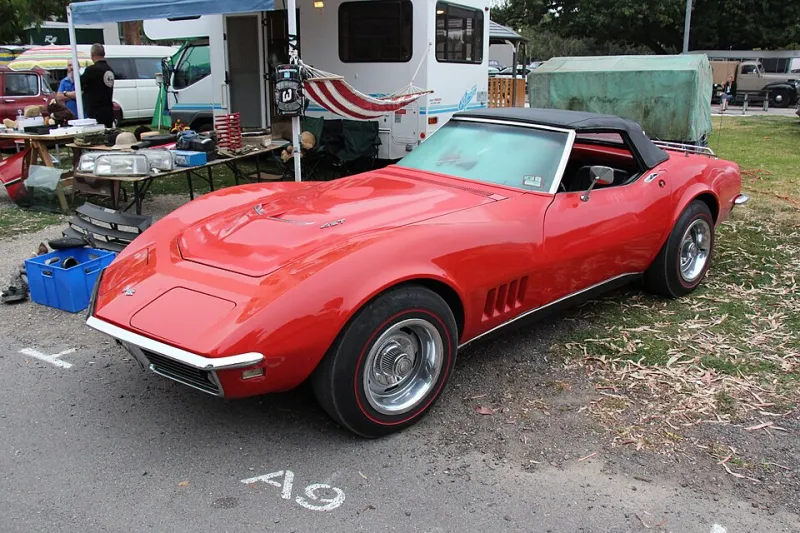
Bill Mitchell and Larry Shinoda handed the world something genuinely radical in 1968. The Mako Shark II concept had been turning heads at auto shows for years, and when the production C3 finally arrived, it delivered on that promise in a way that felt almost aggressive. The long hood, the pinched waist, the fender flares — this was a car that looked fast standing still.
Crucially, the 1968–1972 models carried the "Stingray" badge, a name that had been retired after 1967 and would return later in different form. That badge matters to collectors in a way that's hard to quantify but easy to see reflected in auction results. There's a psychological premium attached to the name, and the market has priced it in accordingly.
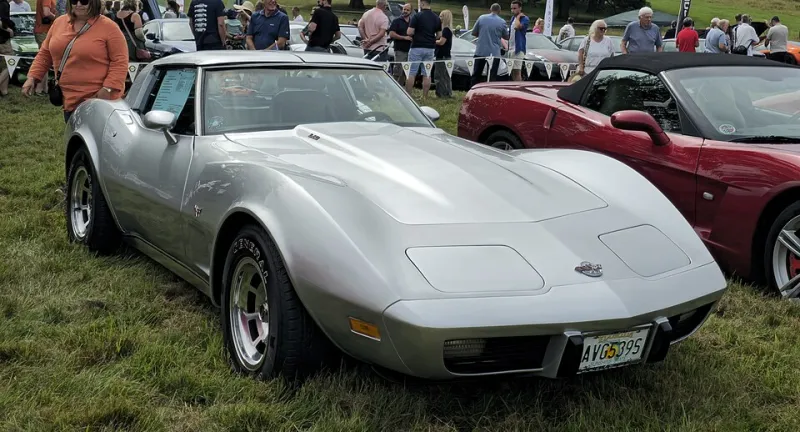
The hidden headlights, the removable roof panels, the aggressive body sculpting — all of it lands differently when you're looking at an early car versus the federally softened versions that came after 1972. Emission regulations and safety requirements gradually smoothed out the C3's edge as the decade wore on. The early cars caught the design at its most uncompromised.
The Performance Argument
Here's where things get really compelling for the collector crowd. The 1970 model year in particular is considered by many appraisers to be the high-water mark of C3 performance. That's the year Chevrolet offered the LT-1 small-block — a 370-horsepower, solid-lifter screamer — alongside the monstrous LS6 454 big-block option, rated at 465 horsepower in its most aggressive tune.
Think about that for a second. These are factory horsepower numbers that rival modern performance cars, and they were available in a production sports car over fifty years ago. Numbers-matching examples with those drivetrains intact don't come up for sale every weekend, and when they do, buyers line up.
Even the more modest engines from this era — the base 350 small-block, the L46 — were strong, well-engineered mills that have proven durable and relatively easy to source parts for. That reliability factor matters to collectors who actually plan to drive their acquisitions, not just trailer them to shows.
What the Auction Data Actually Shows
Real sales figures back up the enthusiasm. According to data tracked by Hagerty, the specialist classic car insurer and valuation authority, 1970 Corvettes with the LS6 option have consistently traded above $100,000 in excellent condition, with exceptional documented examples pushing well past $200,000. The LT-1 cars aren't far behind.
Mecum's 2023 Indianapolis auction saw multiple early C3s exceed their pre-sale estimates, a trend that's repeated itself year over year. Even driver-quality 1968 and 1969 examples — cars with some honest wear and maybe not a perfect matching-numbers story — regularly clear $35,000 to $55,000, which represents meaningful appreciation from where these cars sat just fifteen years ago.
Barrett-Jackson's Scottsdale event, the Super Bowl of American collector car auctions, regularly features early C3s as centerpiece lots. The crowd response when these cars hit the block tells you everything you need to know about their cultural staying power.
The Rarity Factor People Underestimate
Here's something casual fans of the hobby sometimes overlook: the survivorship math on these early cars is not in collectors' favor. The 1968 model year saw roughly 28,500 units produced. That sounds like a lot until you account for fifty-plus years of accidents, rust, neglect, parting out, and the general entropy that consumes old cars.
Numbers-matching examples — cars where the engine, transmission, and other major components still carry the original date codes and casting numbers matching the car's build sheet — represent a small fraction of survivors. Documented, unrestored originals are rarer still. When one surfaces with a credible history file and clean paperwork, the collector community takes notice immediately.
What Dealers and Appraisers Are Saying
Talk to any reputable Corvette specialist dealer and you'll hear a consistent theme: inventory of quality early C3s is tightening. The cars that do come to market increasingly come from estates, where families are liquidating collections assembled decades ago. That pipeline isn't infinite.
Appraisers working the concours and auction circuit point to a generational shift in buying patterns. Buyers who grew up seeing these cars as the ultimate symbol of American automotive aspiration — people now in their 50s and 60s with the financial means to act on that nostalgia — are competing aggressively for the best examples. That demand curve isn't pointing downward.
So Should You Buy One?
If you're considering an early C3 as a collector purchase, the fundamentals are about as solid as they get in the hobby. The cars have established valuations, a deep parts supply ecosystem, a passionate community (hello, you're reading this on C3 Cars), and a track record of holding and building value through multiple economic cycles.
That said, buying blind is never smart. Have any prospective purchase inspected by a qualified Corvette specialist before money changes hands. Verify the VIN decoding against the trim tag and any available build documentation. Check the frame rails and body mounts carefully — these cars can hide rust in ways that don't show up on a casual walk-around.
The early C3 market rewards buyers who do their homework. And for sellers holding a documented, solid example? There's rarely been a better time to find a motivated buyer willing to pay a fair price for something genuinely special.
The auction floors keep proving it, season after season.