Dust, Dollars, and Determination: One Owner's Honest Account of Restoring a C3 From Scratch
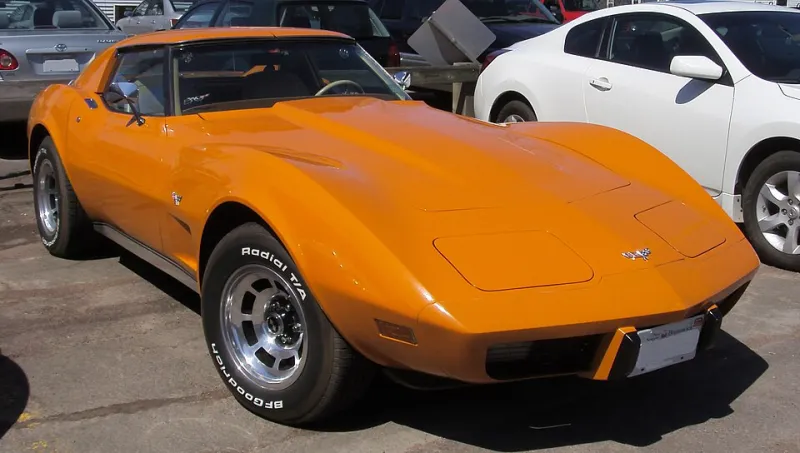
Photo: Calreyn88, CC BY-SA 4.0, via Wikimedia Commons
Mike Callahan had been looking for a C3 project for about two years when his neighbor mentioned a car sitting in a barn outside Knoxville, Tennessee. It had been there since 1991. A 1975 Corvette, Bright Yellow over black interior, with 67,000 original miles and a story that had gone cold somewhere in the Reagan administration.
What followed was 14 months, roughly $23,000 in total expenditure, and more weekends than Mike cares to count. He documented the whole thing — receipts, photos, frustrations, and all. Here's how it actually went.
The Find: Month 1, Weeks 1–3
Acquisition cost: $6,500
The car looked worse than it was, which Mike would later describe as both a blessing and a trap. Surface rust, cracked weatherstripping, a seized parking brake, and a fuel system that hadn't seen fresh gas in over a decade. The fiberglass body was largely intact — no major cracks, no significant repairs visible. The interior was rough but complete.
Mike paid $6,500 after a two-hour negotiation. He had a pre-purchase inspection done by a local Corvette specialist (cost: $150) who confirmed the frame had surface rust but no structural compromise. That inspection was money well spent — it gave him confidence to proceed and a written record of the car's condition at acquisition.
Lesson learned early: Never skip the inspection. Even a car that looks solid can hide frame issues, hidden collision repairs, or a birdcage that'll cost you serious money to address.
Month 1 total: $6,650
Teardown and Assessment: Months 2–3
Cost: $1,200 (shop supplies, fluids, initial parts)
Mike did the teardown himself in his two-car garage, which saved him significant labor costs but required a real investment of time — roughly 60 hours over six weeks. Every component came off and got catalogued. He photographed everything before disconnecting it, a habit he credits with saving him hours of confusion during reassembly.
What he found during teardown:
- The L48 350 small-block turned over freely and showed good compression across all cylinders. This was the best possible news.
- The Turbo-Hydramatic 350 automatic transmission shifted through the gears by hand but would need a full rebuild before the car went back on the road.
- The rear differential had a noticeable whine — bearings were shot.
- The birdcage (the inner steel structure supporting the fiberglass body) had rust at the rocker areas but nothing catastrophic. Repairable, but not free.
- All four brake calipers were seized. Full brake system replacement was going on the list.
The teardown phase is psychologically brutal. You take apart a car that, even in rough shape, at least looks like a car. What you end up with is a pile of parts and a bare frame. Mike described it as "the point where you either commit or you list it on Craigslist and pretend it never happened."
Running total through Month 3: $7,850
Mechanical Rebuild: Months 4–7
Cost: $7,400
This is where the budget really starts to move. Mike handled some of the work himself and farmed out the rest to a trusted local shop that specializes in classic GM vehicles.
Engine: The L48 got a full rebuild — new rings, bearings, timing chain, water pump, and carburetor. Mike sourced most parts through Eckler's and a local machine shop handled the block work. Total engine rebuild cost came to around $2,800, including labor for the machine work but with Mike doing the assembly himself.
Transmission: The TH350 went to a specialty rebuilder. Cost: $650 for a complete rebuild with a one-year warranty. Mike's advice here is firm — don't cut corners on the transmission. A failed trans after you've reassembled the car is a nightmare scenario.
Rear differential: New bearings, seals, and a fluid flush. Handled by the local shop. Cost: $480.
Brakes: Complete four-wheel disc brake rebuild with new calipers, rotors, pads, lines, and master cylinder. Mike used a combination of OEM-spec replacements and quality aftermarket parts. Total: $890.
Cooling system: New radiator, hoses, thermostat, and a proper flush. Cost: $340.
Fuel system: New fuel tank, sending unit, fuel pump, and lines. Thirty-year-old fuel system components are not worth gambling on. Cost: $620.
Electrical: New battery, alternator, and a full going-over of the wiring harness. Mike found two sections with cracked insulation that could have caused problems. He replaced those sections and installed an inline fuse block as a safety measure. Cost: $620 in parts, with Mike doing the labor.
Running total through Month 7: $15,250
Body and Paint: Months 8–11
Cost: $6,100
This is the phase that separates a driver-quality restoration from a show car, and the price difference between those two outcomes is substantial. Mike was clear from the start — he wanted a great driver, not a trophy car. That decision shaped every choice in this phase.
The birdcage rust was addressed by a local metalworker who specializes in classic cars. The repairs were solid and properly treated, though not invisible up close. Cost: $1,400.
The fiberglass body panels were in better shape than expected. Minor surface imperfections, a small crack near the driver's door jamb, and some spider-webbing that needed attention. A fiberglass specialist handled the repairs. Cost: $800.
Paint was the big expense. Mike went with a quality single-stage urethane in the original Bright Yellow — matching the factory color was important to him. The shop he chose had strong reviews in the local Corvette club community, which is exactly how he'd recommend finding a painter. Cost: $3,900 for full prep and paint.
Trimming out the exterior — new weatherstripping, emblems, chrome pieces — added another $600 sourced through a combination of Corvette Central and a few eBay finds for the harder-to-find pieces.
Running total through Month 11: $21,350
Interior and Final Assembly: Months 12–14
Cost: $1,800
Mike chose a quality reproduction interior kit — seat covers, door panels, carpet, and headliner — rather than having the original pieces restored. For a driver-quality build, reproduction interior components offer excellent value and hold up well to actual use. The kit came from Corvette Central and cost $1,100. Mike installed everything himself over three weekends.
Final assembly, fluid fills, alignment, and a proper tune-up added another $700, including a professional alignment and a carb tune at a local shop.
Final total: $23,150
What Mike Would Do Differently
Ask any restorer this question and you'll get a long answer. Mike's list:
- Budget 20% more than you think you need. Surprises are not optional — they're guaranteed.
- Find your specialist shops before you start. Scrambling to find a good painter or transmission rebuilder mid-project costs time and sometimes money.
- Document obsessively. Photos of every connection, every component, every "before" state. You'll thank yourself during reassembly.
- Don't rush the teardown assessment. Take your time understanding what you actually have before you start spending.
Is It Worth It?
Mike's '75 Corvette is now a confident, good-looking driver that he puts about 3,000 miles a year on. A comparable finished example at auction would likely fetch $28,000–$32,000 in today's market, meaning he's got equity in the car and — more importantly — a complete understanding of every nut and bolt in it.
Was it worth it? He doesn't hesitate. "Every single weekend," he says. "Even the ones where nothing went right."
That's the C3 restoration experience in a sentence. It's not easy, it's not cheap, and it's absolutely, completely worth it.