Fix It Up or Leave It Alone? The Decision That Could Make or Break Your C3's Value

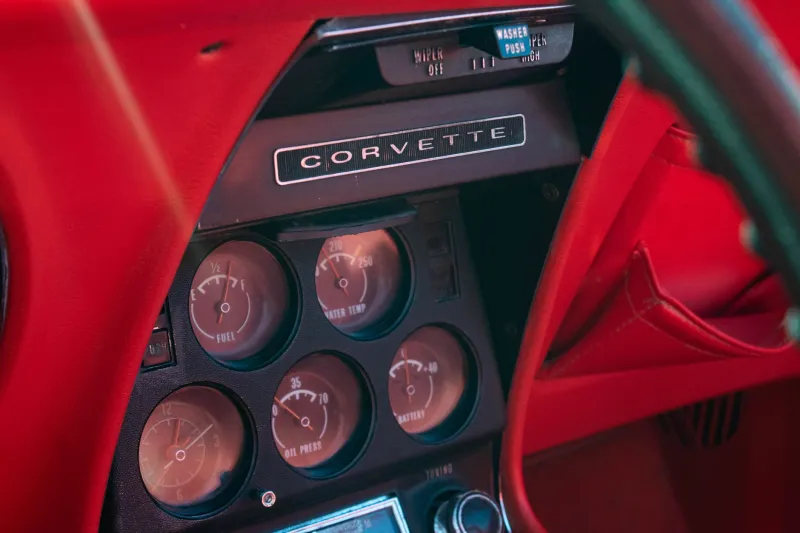
Photo by Photo by Maria Klichik on Unsplash on Unsplash
There's a moment every C3 owner knows. You're standing in the garage, flashlight in hand, staring at peeling paint or a cracked dashboard, and the question hits you square in the chest: do I restore this thing, or do I leave it exactly the way I found it?
It sounds simple enough. But in the C3 collector world, that decision carries real financial weight — sometimes to the tune of tens of thousands of dollars. Get it right, and you've either got a stunning show car or a sought-after survivor. Get it wrong, and you've just wiped out the very thing that made your Corvette worth owning in the first place.
We talked to collectors, dealers, and long-time C3 enthusiasts across the country to get a clearer picture of where this debate stands right now.
What "Preservation" Actually Means in the C3 World
First, let's clear something up. Preservation doesn't mean neglect. A preserved C3 is one where the original paint, interior, drivetrain, and trim have been maintained in their factory-correct state — even if that means showing honest wear. Think of it as respecting the car's biography.
"People throw around the word 'survivor' like it's automatically a good thing," says Mike Callahan, a Dallas-based collector who's owned over a dozen C3s since the early 2000s. "But a true survivor — one with matching numbers, original paint, and documented history — that's genuinely rare. That car tells a story you can't fake."
The appeal of original, unrestored examples has grown significantly over the past decade, especially among serious collectors. Auction houses like Barrett-Jackson and Mecum have repeatedly demonstrated that well-documented survivors often command premiums that freshly restored cars simply can't match, particularly for the high-demand 1968–1972 model years.
The Restoration Temptation — And Where It Goes Wrong
Restoration, on the other hand, can be a beautiful thing when it's done right. A correctly executed, numbers-matching restoration on a rare C3 — say, a 1969 L88 or a 1970 LT1 — can absolutely justify the investment and then some.
But here's where a lot of owners get tripped up: they restore the wrong car.
Not every C3 deserves a frame-off restoration. A mid-'70s base model in decent driver condition might cost $15,000 to $20,000 to restore properly, but the finished product might only fetch $22,000 to $28,000 on a good day. That math doesn't work.
"I've seen guys dump $30,000 into a '76 Stingray and then wonder why they can't get $25,000 for it," says Jennifer Holt, a Corvette specialist dealer based in Tennessee. "The market doesn't care how much you spent. It cares about what the car is."
This is where knowing your specific model year matters enormously. The C3 spans a wide range — from the highly desirable big-block cars of the late '60s to the emissions-era models of the mid-to-late '70s that the market has historically been cooler on. The restoration calculus is completely different depending on which end of that spectrum you're working with.
Authenticity Disputes: The Hidden Minefield
One thing that doesn't get talked about enough in the restoration conversation is how quickly a well-intentioned rebuild can turn into an authenticity nightmare.
Once you start replacing original components — even worn-out ones — you open the door to questions that are nearly impossible to close. Was that carburetor on the car from the factory? Is that the correct date-coded block? Were those seats reupholstered with period-correct materials?
For casual drivers, none of this matters much. But for serious collectors, these questions directly affect what a car is worth. NCRS (National Corvette Restorers Society) judging standards are exacting, and a car that fails to meet documentation requirements — even if it looks flawless — can lose significant value in the eyes of knowledgeable buyers.
"I bought a beautiful-looking '69 at a local show a few years back," recalls Tom Weston, an NCRS member from Ohio. "Paint was perfect, interior was immaculate. Turned out the engine had been replaced somewhere along the way and the paperwork trail went cold. I paid driver money for what looked like a show car. Lesson learned."
When Restoration Is Absolutely the Right Call
None of this means restoration is a bad idea — far from it. There are clear situations where it makes total sense.
If you've got a rare, documented car that's been damaged or poorly maintained, a correct restoration can recover and even exceed its pre-damage value. High-option cars — those with factory side pipes, big-block engines, or rare color combinations — often have enough inherent collector appeal to support restoration costs.
Similarly, if your goal is showing the car rather than selling it, the calculus shifts entirely. NCRS Top Flight awards and Bloomington Gold certifications carry real prestige in the community, and achieving them requires a level of detail that only a proper restoration can deliver.
The key is going in with realistic expectations and doing serious homework before the first bolt comes off.
A Framework for Making the Call
So how do you actually decide? Here's a rough framework that most experienced C3 people seem to agree on:
Lean toward preservation if:
- The car retains its original paint, even if worn
- Numbers match and documentation exists
- The model year or option package makes it inherently collectible
- The car runs and drives in its current state
Lean toward restoration if:
- The car has already been partially or poorly modified
- It's a high-value variant (L88, ZL1, LT1, etc.) with strong market support
- You have the documentation to back up a numbers-correct rebuild
- Your goal is showing, not reselling
Think twice before doing either if:
- You're looking at a base model from 1974–1977 with no special options
- The restoration costs will exceed realistic resale value
- You don't have clear documentation of the car's history
The Emotional Side Nobody Talks About
Here's the thing that gets lost in all the financial analysis: some people just want to drive their Corvette. And that's completely valid.
Not every C3 owner is building a portfolio. Some folks buy these cars because they grew up watching them on the road, or their dad had one, or they just love the way a shark-nosed Stingray looks in the driveway on a Saturday morning. For those owners, the restore-or-preserve debate is largely beside the point.
"I put a mild cam in mine and drove it to every car show within 200 miles last summer," laughs Callahan. "Is it a perfect numbers-matching car? No. Did I have the time of my life? Absolutely."
The C3 market is big enough to support every kind of owner — the concours purist, the weekend driver, the investment-minded collector. What matters most is going in with clear eyes about what your car is, what the market will bear, and what you actually want out of the experience.
Because at the end of the day, the best decision is the one you can live with — both financially and in the garage on a Sunday afternoon.