Gone Before You Get There: The Slow Disappearance of the True C3 Barn Find
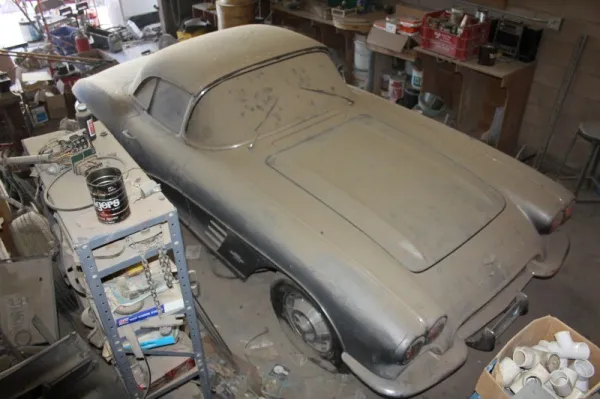
Photo: dusty classic Corvette in old garage barn forgotten car, via barnfinds.com
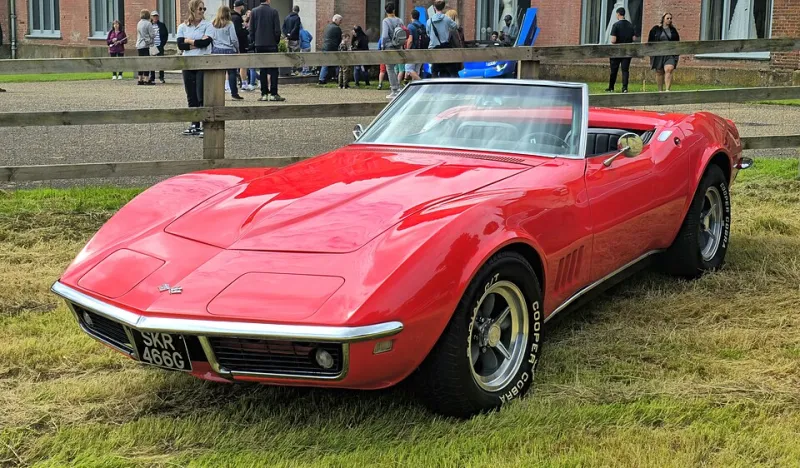
There's a story every serious C3 collector has either lived or dreamed about. You're driving through rural Ohio or poking around an estate sale in rural Tennessee, and there it is — a 1969 Corvette coupe, original paint faded to a whisper, sitting under a canvas tarp in a cinder block garage that hasn't seen daylight in thirty years. The owner has no idea what it's worth. You shake hands, write a check, and drive home with a piece of American muscle history.
That story is becoming fiction.
Not because the cars don't exist anymore. Plenty of C3s are still out there in various states of dormancy. But the conditions that made the classic barn find possible — information gaps, geographic isolation, family estates handled without outside research — those conditions are vanishing fast. And for the C3 community specifically, that shift carries real consequences.
How the Internet Killed the Information Gap
The barn find phenomenon was never really about luck. It was about asymmetry. The person selling didn't know what they had, and the person buying did. That gap existed because information was local, slow, and hard to access. A widow cleaning out her late husband's property in 1994 might call a neighbor, put a hand-written sign at the end of the driveway, or list a three-line ad in the local Pennysaver. The right buyer might never hear about it.
Fast forward to today. That same estate is now handled by family members who pull out their phones before they even open the garage door. A quick image search. A Reddit thread. A Facebook Marketplace listing with twelve photos uploaded before the dust settles. Within forty-eight hours, that "hidden" C3 has been seen by collectors in California, Florida, and Michigan who are ready to fly in and write a check.
Platforms like Bring a Trailer, Cars & Bids, and even basic Facebook groups have created a marketplace that is genuinely national in real time. There's no delay, no information bottleneck, and almost no such thing as a local deal anymore.
The Scout Economy
Making things even more competitive is a relatively new layer of the collector ecosystem: the professional scout. These are people — sometimes hobbyists, sometimes full-time operators — who systematically canvas rural counties, attend every estate auction, and maintain relationships with probate attorneys, storage facility managers, and farm equipment dealers. When something turns up, they know before anyone else.
Some of these scouts flip the cars themselves. Others operate as finders for wealthy collectors who pay a premium for first right of refusal. Either way, the practical effect is that the geographic and social blind spots that once allowed barn finds to happen are being actively eliminated by people whose entire job is to close those gaps.
For the average enthusiast who still fantasizes about a weekend road trip turning into a miraculous C3 discovery, this is a sobering reality. You're not just competing with other hobbyists anymore. You're competing with an informal but highly efficient intelligence network.
What This Means for C3 Values
The barn find wasn't just a romantic experience — it was also one of the last remaining ways to acquire a legitimate C3 at a price that reflected ignorance rather than market value. Those deals are gone. What's replaced them is a market where even rough, non-running examples are priced with full awareness of what restored equivalents bring at auction.
That's not entirely bad news. Transparent pricing protects sellers from being taken advantage of. It also gives buyers a clearer picture of what they're getting into financially before they commit. But it does mean that the entry point for C3 ownership has risen across the board, including at the rough end of the spectrum where barn finds used to live.
A legitimately "discovered" C3 — one that hasn't been touched, listed, or priced with market awareness — is now rare enough that when one does surface, it tends to generate a bidding frenzy that quickly erases any below-market advantage anyway.
The Last Generation of Lucky Finders
There's a specific window of time — roughly the late 1980s through the mid-2000s — when the barn find was a genuine, repeatable phenomenon for C3 hunters. The cars were old enough to be forgotten but not yet valuable enough to command serious attention. The internet existed but wasn't yet the omnipresent tool it is today. Estate sales were still largely local affairs. Regional swap meets and classified ads in enthusiast magazines were the primary discovery mechanisms.
The collectors who were actively hunting during that era found some extraordinary cars. Matching-numbers big-blocks with original window stickers still in the glovebox. Low-mileage base models that had been driven to church and nowhere else for twenty years before being parked. Convertibles with factory hardtops still in the trunk.
Those buyers were the last generation to experience automotive archaeology in its truest form, and the stories they carry are increasingly irreplaceable. If you know someone who bought a C3 that way, ask them to tell you about it. That experience is becoming as collectible as the cars themselves.
Are There Any True Barn Finds Left?
Honestly? A few. They tend to surface in places with the least digital connectivity — deep rural communities where older generations still handle estates without consulting the internet, or situations involving genuinely obscure storage locations like farm outbuildings that weren't part of a formal estate inventory.
But even in those cases, the window between discovery and market exposure is measured in hours, not days. Someone at the estate sale posts a photo. A local auction house does a quick valuation search. A grandchild texts a picture to a car-savvy friend. The information spreads faster than it ever has before.
The more realistic hunting ground for a below-market C3 today isn't a dusty barn — it's a motivated private seller who needs a quick transaction, a project car that's been sitting half-disassembled for years, or an estate that went through probate without attracting collector attention because the listing photos were bad and the description was vague.
Adjusting Your Expectations Without Losing the Dream
None of this means the thrill of C3 hunting is dead. The cars are still out there, and the process of finding the right one — researching VINs, tracing ownership histories, tracking down documentation — carries its own satisfaction that no algorithm can replicate.
But if you're building your acquisition strategy around the hope of a classic barn find moment, it's worth recalibrating. The more productive mindset is to treat every lead seriously, move fast when something surfaces, and build relationships within the C3 community that give you access to cars before they hit the open market.
The barn find era was a golden chapter for C3 collectors, and the stories from that time deserve to be told and preserved. But the next chapter of C3 collecting is being written by people who are fast, informed, and connected — and that's actually a pretty exciting place to be.