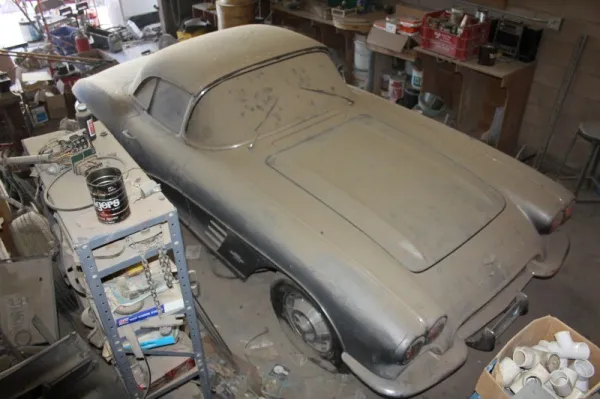
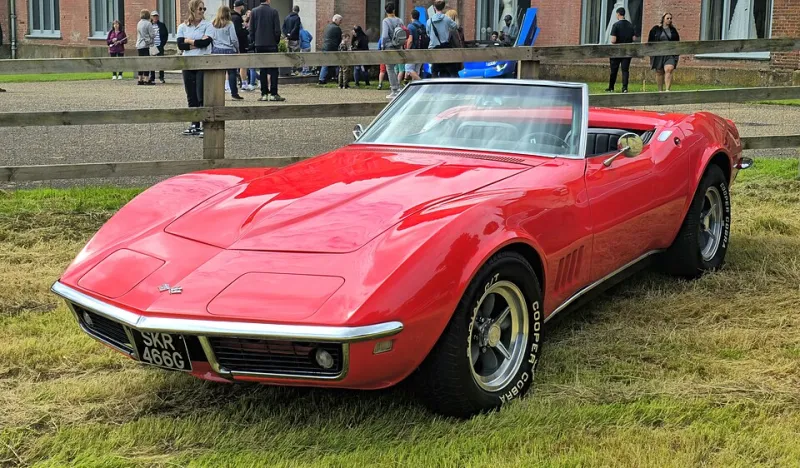
Frozen in Time, Falling Apart: The Truth About Low-Mileage C3 Corvettes
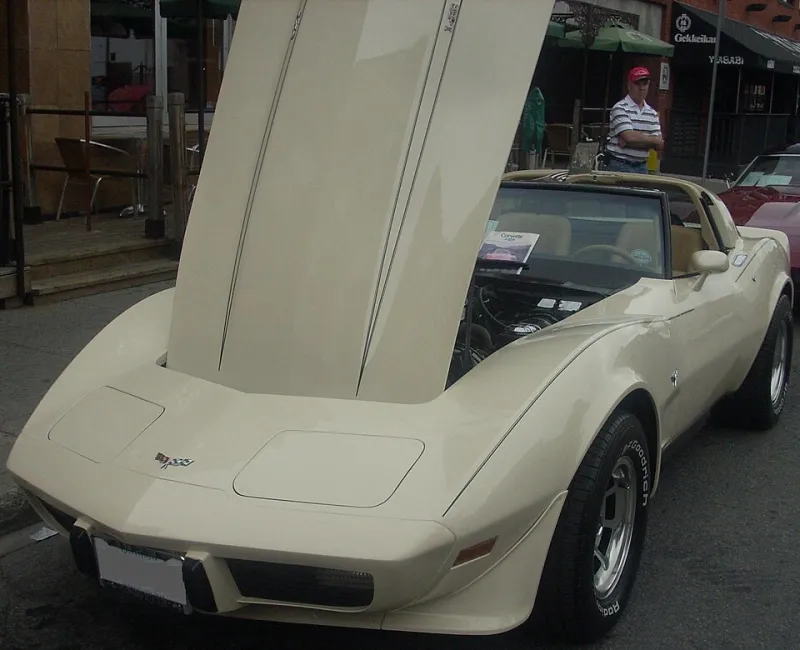
Photo: Bull-Doser, Public domain, via Wikimedia Commons
There's a certain magic to finding a C3 Corvette with a suspiciously low odometer reading. You picture it tucked under a tarp in some retired engineer's garage in Ohio, barely touched since the Carter administration, smelling faintly of old rubber and nostalgia. The numbers are seductive: 18,400 original miles, one owner, never raced. In the C3 collector world, that kind of listing gets hearts pounding and wallets opening fast.
But here's the thing nobody puts in the classified ad — sitting still for thirty or forty years does its own kind of damage. Sometimes the damage is worse than if the car had been driven regularly. Before you wire a deposit on that "pristine garage queen," it's worth slowing down and thinking critically about what low mileage actually means on a car that's been stationary since the Reagan years.
Miles Aren't the Whole Story
We've been conditioned to think of odometer readings as the primary measure of a used car's worth. That logic makes reasonable sense for a five-year-old pickup truck. For a C3 Corvette that spent the last three decades under a car cover in a climate-uncontrolled garage in Tennessee or Arizona, it's almost meaningless.
Rubber doesn't care about miles. It cares about time, heat, and moisture. Every seal, every gasket, every hose, and every inch of weatherstripping on a long-stored C3 has been quietly degrading regardless of whether the engine ever turned over. Brake seals in the calipers and master cylinder dry out and crack. Fuel lines get brittle. The rear differential and transmission seals shrink. What you're looking at isn't a preserved car — it's a car that's been quietly rotting in slow motion.
The Engine Problem Nobody Warns You About
Here's a scenario that plays out more often than sellers want to admit: a C3 sits untouched for twenty-plus years, and when someone finally tries to start it, the engine either won't turn over or fires up only to reveal a host of expensive problems.
Without regular operation, oil drains away from critical engine surfaces and settles in the pan. That leaves cylinder walls, cam lobes, and lifters exposed to surface oxidation. On a small-block Chevy that's been dormant since the early 1980s, you can end up with rust scoring on the cylinder walls even with relatively low miles on the clock. Piston rings can stick. Camshaft lobes can show wear patterns from that first dry startup after years of sitting.
Before any low-mileage C3 gets celebrated, the engine deserves a serious mechanical inspection — not just a cold start in the driveway. A compression test and a leak-down test will tell you far more than the odometer ever could.
Fuel Systems That Have Turned Into Science Experiments
C3s from the 1970s especially were sent home with carbureted fuel systems that do not tolerate long-term storage gracefully. Old gasoline leaves behind varnish deposits that clog jets, passages, and needle seats inside the carburetor. The fuel tank itself may have rust scale or sediment built up from years of moisture condensation. Fuel pumps on long-stored cars frequently fail on first use.
If a car sat with fuel in the system — which most of them did — plan on a full carburetor rebuild at minimum, and possibly a tank cleaning or replacement. This is true even if the odometer reads like the car barely left the dealership.
Brakes: The Safety Issue That Can't Wait
This one is genuinely dangerous, and it deserves direct language. Do not drive a long-stored C3 Corvette on public roads before the entire brake system has been inspected and rebuilt as needed. Period.
Brake fluid is hygroscopic — it absorbs moisture from the air over time. In a car that's been parked for decades, that fluid has long since degraded. Rubber brake hoses get hard, crack internally, and can collapse under pressure, blocking flow to individual calipers. Caliper pistons seize in their bores. Wheel cylinders — if the car still has drums in the rear — corrode and leak.
A low-mileage C3 with seized front calipers isn't a bargain. It's a liability. Budget for a complete brake system overhaul on any long-stored example regardless of how few miles it shows.
Cooling System Surprises
Antifreeze has a service life, and in a car that's been sitting since the 1980s or 1990s, whatever's in the cooling system has long since broken down chemically. Degraded coolant becomes acidic and eats away at aluminum components and water pump impellers. Hoses that look intact on the outside can be soft and mushy on the inside, ready to fail the moment the engine reaches operating temperature.
Radiators in long-stored C3s frequently show internal corrosion and scale buildup. A full cooling system flush and inspection — including a pressure test — should be non-negotiable before you consider a low-mileage barn find truly road-ready.
What to Actually Inspect
So what's the right approach when you're standing in front of a garage-kept C3 with a compelling mileage story? Here's a practical checklist to work through:
- Check all rubber: Squeeze every hose, examine every seal you can reach, and look hard at the brake lines for surface rust or brittleness.
- Pull the oil cap and dipstick: Look for milky residue (moisture contamination) or thick sludge. Neither is a good sign.
- Inspect the brake fluid reservoir: Dark, murky fluid that's been in there for decades tells its own story.
- Look under the car for evidence of leaks: Stains on the garage floor under the differential, transmission, and engine are clues about what's been weeping while the car sat.
- Check the tires: Even if they show minimal tread wear, tires over six years old are suspect. Tires that have been sitting flat-spotted for years need replacement.
- Open the door seals and look at the body channels: Long-stored cars often trap moisture in places that aren't immediately visible, leading to hidden corrosion.
- Get a professional pre-purchase inspection: For any significant purchase, this step isn't optional.
When Low Mileage Is Genuinely Worth a Premium
None of this means you should walk away from every low-mileage C3. A well-documented, properly stored example that received periodic maintenance — fresh fluids, occasional starts, climate-controlled storage — is a genuinely different animal from a forgotten car that got locked in a barn and ignored. Documentation matters enormously here. Service records, storage logs, and maintenance receipts transform a low-mileage C3 from a gamble into a legitimate prize.
The key distinction is between a car that was preserved and a car that was simply abandoned. Both might show five-figure odometer readings. Only one of them is actually worth the premium.
The Bottom Line
Low mileage is a data point, not a verdict. In the C3 market, it's a starting point for investigation — not a reason to skip it. The Corvettes that get driven, maintained, and cared for over the years often present fewer surprises at the inspection stage than the ones that spent thirty years waiting for a second act. Do your homework, bring in a qualified mechanic who knows these cars, and resist the urge to let a compelling number on a five-digit odometer do your thinking for you.