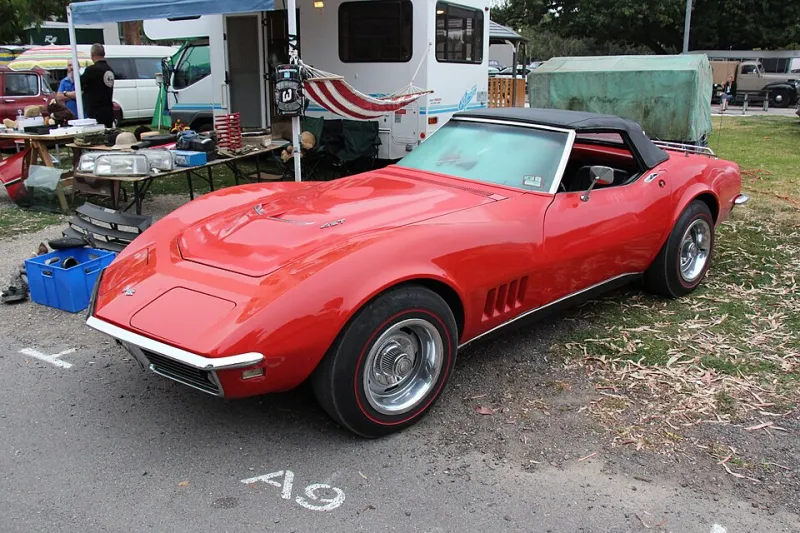
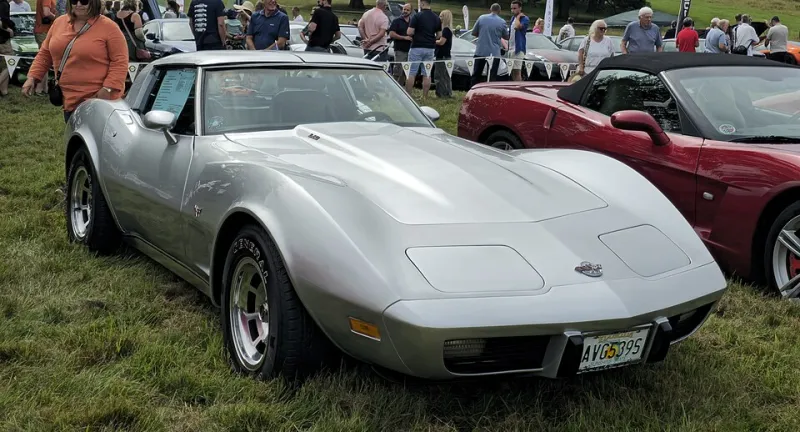
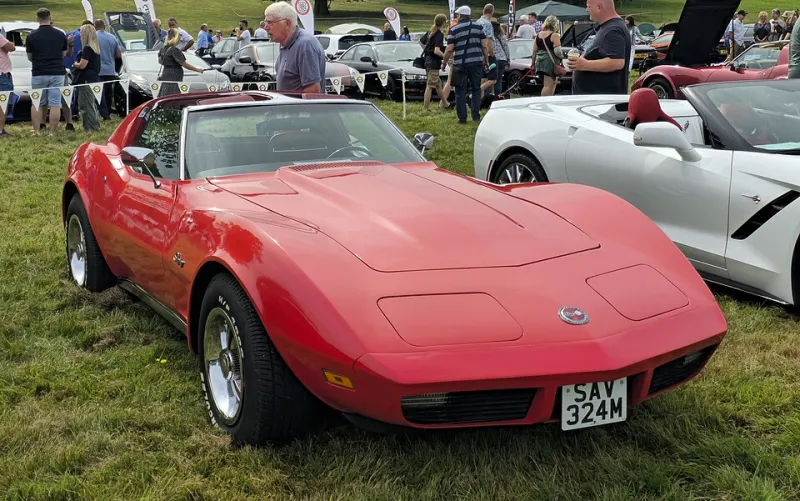
Drop In or Walk Away? The Real Talk on Swapping Engines in Your C3 Corvette
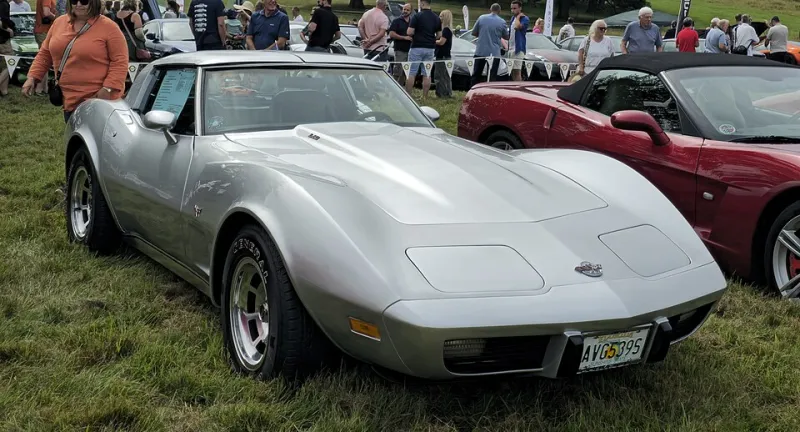
Photo: Calreyn88, CC BY-SA 4.0, via Wikimedia Commons
Let's get something out of the way upfront: there's no universally right answer when it comes to swapping the engine in a C3 Corvette. What there is, however, is a right answer for your specific situation — and getting there requires honest thinking about what you actually want from the car, how you plan to use it, and what you're willing to give up in the process. This isn't a debate about which side is morally superior. It's a practical guide to making a decision you won't regret.
Why People Swap in the First Place
Before judging anyone's choices, it's worth understanding the motivations. C3 Corvettes span from 1968 to 1982, and the engine situation across that range is... uneven. The early cars — particularly the big-block monsters from 1968 through 1972 — are legitimately powerful by any era's standard. A numbers-matching L88 or LS6 needs no apology.
But then came the emissions era. By the mid-seventies, federally mandated smog equipment had squeezed horsepower ratings into genuinely embarrassing territory. A 1975 Corvette with the base 350 was rated at 165 horsepower — in a sports car that weighed over 3,400 pounds. You can understand why someone might look at that situation and start browsing crate engine catalogs.
Beyond raw power, there are reliability and parts-availability arguments. Modern engines — particularly GM's LS family — are extraordinarily well-supported, fuel-efficient, and tunable in ways that vintage small-blocks simply aren't. For a driver who wants to put real miles on a C3 without constantly nursing a carburetor or chasing vacuum leaks, the appeal is genuine.
The Value Conversation Nobody Wants to Have
Here's where things get uncomfortable. Engine swaps — even beautifully executed ones — almost universally reduce collector value when compared to a correct, documented, numbers-matching car in comparable condition. This isn't opinion; it's what the auction results consistently show.
At major sales, a verified matching-numbers C3 with its original drivetrain intact commands a premium that a swapped car simply cannot match, regardless of how much money went into the swap. Buyers in the serious collector market are paying for authenticity, documentation, and historical integrity. A modern LS3 under the hood, no matter how clean the install, tells a different story than the one those buyers want to own.
That said, not every C3 is a collector-grade investment piece. A high-mileage, non-numbers-matching 1977 that spent twenty years as a daily driver isn't a museum artifact — it's a project car, and treating it like one is perfectly reasonable.
Real Owner Perspectives
Talk to enough C3 owners and you'll find the full spectrum of experience.
Take Marcus, a retired mechanical engineer in Phoenix who swapped a carbureted 350 out of his 1976 coupe and installed a fuel-injected LS376. "I drive this car," he says plainly. "I drive it to car shows, I drive it on road trips, I drove it to my son's wedding. The original engine was tired and getting it right would have cost almost as much as the swap. Now it starts every time, gets better mileage, and makes 480 horsepower. I don't lose sleep over the originality question."
Contrast that with Diane in Nashville, who inherited a 1970 LT1 coupe from her father and spent three years tracking down correct date-coded parts to restore it properly. "That car is worth every penny of what it cost to do right," she says. "And I could sell it tomorrow for significantly more than I have in it. The people who cut corners on originality are leaving money on the table — and leaving history on the table too."
Both of these people are right, for their situations.
The Decision Framework: Five Questions to Ask Yourself
Before you order that crate motor, work through these honestly.
1. What is this car, really? Pull the VIN data and documentation. Is this a numbers-matching car with its original engine? Is it a rare option package or special model? If yes, the calculus shifts heavily toward preservation. If the original drivetrain is already gone, your decision space opens up considerably.
2. How will you use it? A car that lives in a climate-controlled garage and attends three shows a year has different needs than one that sees mountain roads every weekend. Drivers benefit more from modern reliability. Show cars benefit more from correctness.
3. What's your exit strategy? If you plan to sell in five to ten years, understand the market you're selling into. Collector buyers reward originality. Performance enthusiasts might actually prefer a clean swap. Know your future buyer before you make irreversible decisions.
4. Are you documenting everything? If you do swap, keep the original engine. Store it, tag it, document it. A swapped car with the matching original engine still in the owner's possession is a very different proposition than one where the original block is gone forever. Future restorers — and future buyers — will thank you.
5. Can you afford to do it right? A cheap engine swap can be worse than no swap at all. Sloppy wiring, mismatched accessories, and poor fitment create a car that satisfies neither the performance crowd nor the purists. If you're going to swap, budget for a professional installation with clean fabrication, proper cooling upgrades, and a result that looks intentional rather than improvised.
When a Swap Actually Makes Sense
There's a category of C3 that is genuinely well-served by a thoughtful engine upgrade: the malaise-era driver that isn't numbers-matching, carries no special documentation, and would cost more to restore correctly than it would ever return in collector value. These cars are candidates for what the community sometimes calls a "restomod" build — modernized mechanicals wrapped in period-correct sheet metal and trim.
Done well, a restomod C3 can be a spectacular machine. The platform is inherently strong, the body lines are timeless, and a modern drivetrain can transform the driving experience in ways that make the car genuinely usable as transportation rather than just a rolling museum piece.
The key word is done well. Research builders who specialize in C3 restomods. Look at their previous work. Talk to their past clients. The difference between a professional restomod and an amateur engine swap is enormous, both in the driving experience and in what the car is worth when you eventually sell it.
Preserving the Soul While Upgrading the Muscle
If there's a philosophy that threads this needle, it's this: respect what the car is before you change what it does. Understand the history, document the current state, and make decisions that are reversible where possible. The C3 Corvette is an American icon — third-generation, fifteen model years, and an aesthetic that still turns heads fifty years later. Whatever you do under the hood, the soul of the car lives in the whole package.
Swap smart, document everything, and drive the wheels off it. That's what these cars were built for.