The Paper Trail: What Casting Numbers and Trim Tags Really Tell You About a C3
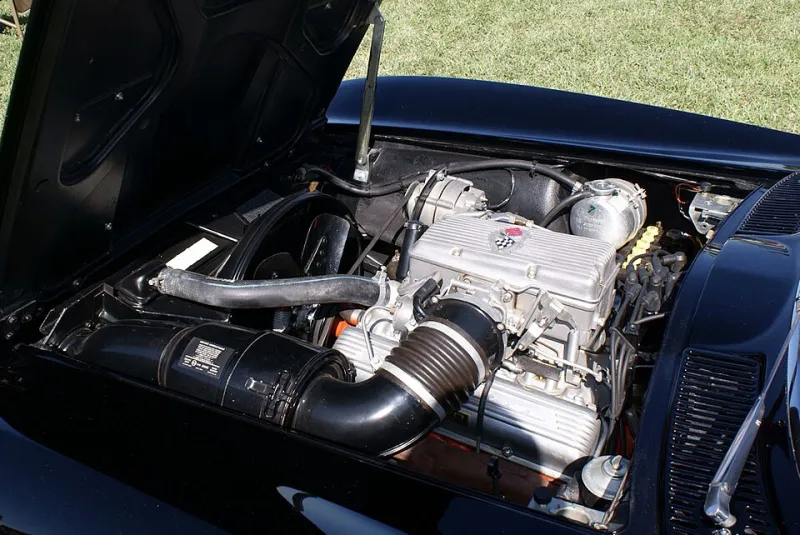
Photo: Valder137, CC BY 2.0, via Wikimedia Commons
Ask a seller if his '71 Corvette is numbers matching and watch how quickly he answers. Then watch how quickly the answer falls apart when you ask a follow-up question.
Here's the truth the hobby doesn't like to say out loud: on a C3, the term 'matching numbers' is mushier than most buyers realize. Unlike a 1969 Camaro Z/28 or a numbers-matching Mustang boss car, the C3's originality story is spread across several different documents and stampings — and only some of them actually affect value.
What the Engine Casting Number Actually Tells You
Start with the block itself. The casting number, found on a pad near the bellhousing area, tells you the casting design and date range — for example, the famous 3946074 small-block casting used across several years. What it does not tell you is the engine's displacement, horsepower rating, or whether it belongs in your car.
The more useful stamping is the engine suffix code stamped on the front pad of the block. That's the VIN derivative plus a two-letter suffix that ties the engine to a specific model year, transmission, and horsepower combination. A 1970 LT-1 carries a suffix code that's different from a base 350, and collectors know the difference cold.
The catch? Engine pads are the easiest thing in the hobby to fake. A skilled restamper with a set of dies can turn a garden-variety 350 into an LT-1 block in an afternoon. That's why serious buyers treat pad stampings as a starting point, not proof.
The Trim Tag: Your Car's Birth Certificate
The cowl tag, riveted to the driver's side of the firewall, is where the C3 gets interesting. It decodes the paint and interior trim combinations — and on a C3, that matters a lot.
Why? Because of the wildcard colors. A 1969 Corvette in Monaco Orange or a 1972 in Ontario Orange is worth real money over a same-year car in Tuxedo Black, assuming condition is equal. The trim tag is your proof that the flared fender car in front of you actually left St. Louis wearing that code, rather than being resprayed to chase a trendy shade.
Learn to read the tag: the paint code is a two-digit number, the trim code covers interior color and material, and the date codes tell you when the body was built. A trim tag with correct rivets, correct font, and codes that match a documented production combination is worth more than any engine stamping.
Build Sheets and the Tank Sticker
Somewhere under your C3's interior — often behind the seats, in the door panels, or tucked against the birdcage — there may be a build sheet. These were used on the line and frequently got left behind when the interior was installed.
The legendary version, though, is the tank sticker. GM affixed a paper build sheet to the inside of the fuel tank on Corvettes, and finding an intact one is like finding the car's birth certificate. It lists the RPO options, the engine and transmission combination, and the production sequence. A legible tank sticker can add thousands to a documented car — and its absence is why so many C3 stories end with 'the tank sticker is long gone.'
Which Codes Actually Move the Money?
Let's be blunt about value. On a C3, these things matter, roughly in this order:
- Rare RPO options — L88, ZL1, LT-1, factory side pipes, aluminum heads. Documented big-ticket options are where the real money lives.
- Correct color/trim combination — especially the high-impact colors.
- Tank sticker or build sheet — documentation is king.
- Correct-date engine with legible suffix code — valuable, but only if everything else checks out.
- Block casting number — the weakest link in the chain. It's a casting, not a fingerprint.
Why 'Matching Numbers' Means Less on a C3
Here's the part that surprises newcomers: because C3 engines were stamped with the VIN derivative but the cars themselves are so often modified, repainted, or re-engined after 50 years, the market has learned to discount the phrase. A C3 with a correct-date replacement block and honest documentation often sells within shouting distance of a pad-matching car — because savvy buyers know how much of the pad story is theater.
The takeaway? Buy the car, not the story. Verify the trim tag, hunt for the build sheet, date-code the drivetrain, and treat any 'matching numbers' claim as a conversation starter, not a closing argument. Your wallet will thank you.